
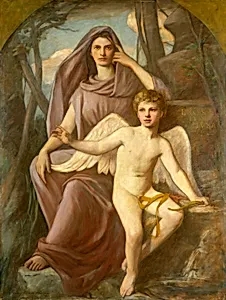
Eros et Musa
1903
Medium
Painting
Classification
Painting
Department
Smithsonian Collection
Museum
Smithsonian American Art Museum
Credit
Smithsonian American Art Museum, Gift of William T. Evans
Accession Number
1909.7.69
Rights
Public Domain
Tags
Art Historical Context
**Eros et Musa** (1903) by Henry O. Walker captures mythical encounter between Eros, the winged god of love often depicted as Cupid, and a Muse, the divine inspirer of the arts. Rendered in oil on canvas, this painting from the Smithsonian American Art Museum collection features nude figures amid rocky surroundings, evoking classical antiquity with its graceful forms and intimate composition. Walker's work reflects the Beaux-Arts prevalent in early 20th-century American art, blending mythological themes with academic precision to celebrate beauty and creativity. As a prominent muralist known for grand public commissions like those in the Library of Congress, Walker brought a sense of timeless elegance to this intimate scene. Gifted to the museum by collector William T. Evans, *Eros et Musa* highlights the era's fascination with Greco-Roman mythology amid America's cultural awakening. The nude figures and rocky backdrop symbolize the raw inspiration of love intertwined with artistic muse, inviting viewers to ponder the eternal dance between passion and poetry. This evocative piece remains a gem in the Smithsonian's holdings, offering a window into how American artists at the turn of the century drew from ancient lore to explore human emotion. (198 words)