
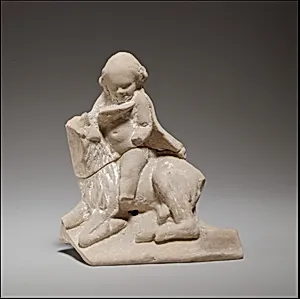
Eros riding a goat
Unknown Artist
3rd century BCE or later
Medium
Terracotta
Dimensions
H. 3 13/16 in. (9.7 cm)
Classification
Terracottas
Culture & Period
Cypriot · Hellenistic
Department
Greek and Roman Art
Museum
Metropolitan Museum of Art, New York, NY
Credit
The Cesnola Collection, Purchased by subscription, 1874–76
Accession Number
74.51.1599
Rights
Public Domain
Tags
Art Historical Context
This delightful terracotta figurine, *Eros Riding a Goat*, captures the spirit of Hellenistic art from ancient Cyprus. Dating to the 3rd century or later, the small sculpture—standing just 3 13/16 inches (9.7 cm) tall—depicts the mischievous god Eros astride a goat, a whimsical pairing that evokes themes of love, desire, fertility. Housed in the Metropolitan Museum of Art's and Roman Art Department as part of the Cesn Collection (acquired 1874–76), it exemplifies Cypriot terracottas, which blended Greek influences with local traditions. Terracotta, or baked clay, was a favored medium in the Hellenistic period for affordable, mass-produced votive offerings and household decorations. These figurines were often placed in sanctuaries or homes to invoke divine protection or celebrate life's joys. The goat, a symbol of lust and vitality in ancient mythology, perfectly suits Eros, the winged god of erotic love, suggesting a lighthearted commentary on passion's wild side. Cyprus, a cultural crossroads between Greece, Egypt, and the Near East, produced such vivid, expressive works during this era of artistic experimentation post-Alexander the Great. Though the artist remains unknown, this piece highlights the Hellenistic shift toward dynamic, narrative scenes that brought myths to life for everyday people, inviting us to smile at antiquity's enduring sense of fun.