
Erotic Print
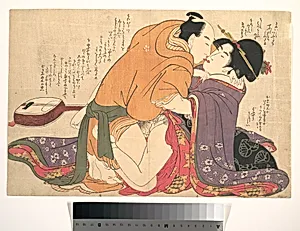
Medium
Woodblock print; ink and color on paper
Dimensions
Image: 10 in. × 15 1/8 in. (25.4 × 38.4 cm) Mat: 15 1/2 × 22 3/4 in. (39.4 × 57.8 cm)
Classification
Prints
Culture & Period
Japan · Edo period (1615–1868)
Department
Asian Art
Museum
Metropolitan Museum of Art, New York, NY
Credit
Anonymous Gift, 1952
Accession Number
JP3163
Rights
Public Domain
Tags
Art Historical Context
This enchanting *Erotic Print* by Kitagawa Utamaro a master of Japan's Edo period (1615–1868), exemplifies the ukiyo-e tradition of woodblock prints celebrating the "floating world" of urban pleasures. Utamaro (1753–1806), renowned for hisin-ga (images of beautiful women), infused this intimate scene with his signature elegance, capturing nude figures in dynamic, sensual poses. Produced during a time when Tokyo (then Edo) buzzed with kabuki theaters and teahouses, such works reflected the era's fascination with fleeting joys amid strict samurai rule. Crafted as a woodblock print with ink and color on paper—measuring 10 × 15⅛ inches—the medium highlights collaborative artistry: designers like Utamaro sketched, carvers shaped cherry woodblocks, and printers layered vibrant hues for stunning depth. Erotic prints, or shunga, were a popular genre, discreetly shared among elites and commoners alike, blending eroticism with exquisite detail in fabrics, expressions, and anatomy. Housed in the Metropolitan Museum of Art's Asian Art department (Anonymous Gift, 1952), this piece underscores shunga's cultural role: not mere titillation, but a sophisticated commentary on desire and humanity, often wrapped as talismans for good fortune. Utamaro's legacy endures in these vivid glimpses of Edo's hidden passions.
About the Artist
Kitagawa Utamaro · 1753–1806
Kitagawa Utamaro (c. 1753-1806) was one of the most celebrated masters of ukiyo-e woodblock printing, revolutionizing the art of bijin-ga (pictures of beautiful women) during Japan's Edo period. Born Kitagawa Ichitaro, his early life remains shrouded in mystery, with conflicting accounts placing his birth in Kyoto, Osaka, Yoshiwara in Edo (modern Tokyo), or Kawagoe in Musashi Province. Under the t...