
Estes
Medium
Drawing
Classification
Drawing
Department
Smithsonian Collection
Museum
Smithsonian American Art Museum
Credit
Smithsonian American Art Museum, Bequest of Carolann Smurthwaite in memory of her mother, Caroline Atherton Connell Smurthwaite
Accession Number
1983.83.199
Rights
Public Domain
Tags
Art Historical Context
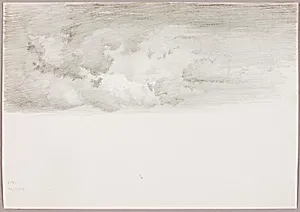
**Estes** (1916) by George El Burr is a delicate drawing that captures the ephemeral beauty of clouds, likely inspired by the dramatic skies over Estes Park in Colorado's Rocky Mountains. Created as a study, this work reflects Burr's deep fascination with atmospheric effects, a hallmark of his career as an American artist known for intimate landscapes and masterful renderings of nature's fleeting moments. At a time when American art was embracing the grandeur of the nation's wilderness amid the early 20th-century push toward modernism, Burr's focus on clouds evokes a sense of wonder and transience. As a drawing, the piece highlights the immediacy of the medium—perfect for sketching rapidly changing cloud formations. Burr's precise lines and tonal shading would have allowed him to study light, volume, and motion on paper, techniques he often refined in his renowned etchings. This preparatory study underscores his role in the tonalist tradition, emphasizing mood and subtlety over bold impressionism. Housed in the Smithsonian American Art Museum through the generous bequest of Carolann Smurthwaite, **Estes** invites visitors to pause and appreciate the sky's quiet poetry, reminding us how a simple drawing can distill the vastness of the American West into something profoundly personal.
About the Artist
George Elbert Burr · 1859–1939
George Elbert Burr was an American printmaker and watercolorist whose career spanned the late nineteenth and early twentieth centuries, earning him a reputation as one of the foremost etchers of the American West. Born in 1859 in Monroe Falls, Ohio, Burr trained as a commercial illustrator before turning his full attention to fine art. He honed his craft through diligent self-study and close obser...