Ctrl K
1859–1939
George Elbert Burr was an American printmaker and watercolorist whose career spanned the late nineteenth and early twentieth centuries, earning him a reputation as one of the foremost etchers of the American West. Born in 1859 in Monroe Falls, Ohio, Burr trained as a commercial illustrator before turning his full attention to fine art. He honed his craft through diligent self-study and close observation of the landscape traditions established by earlier American etchers, eventually developing a meticulous technique that placed him alongside the great etching revivalists of his era.
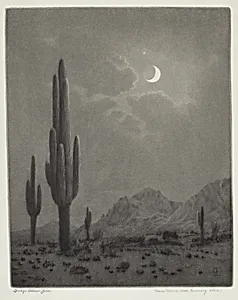
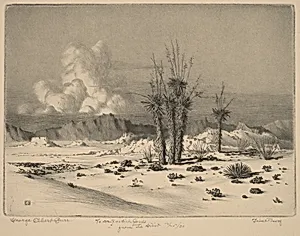
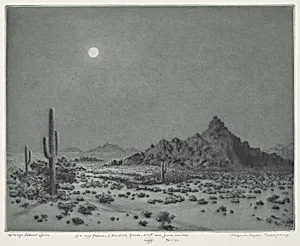
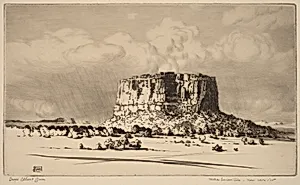
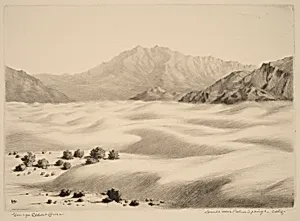
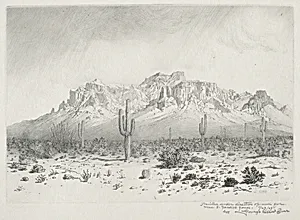
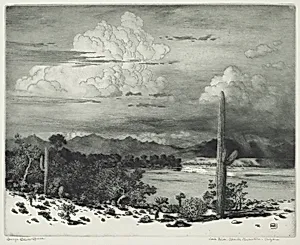
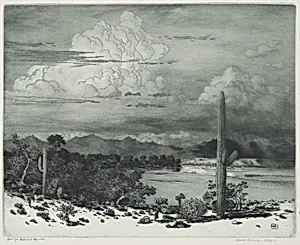
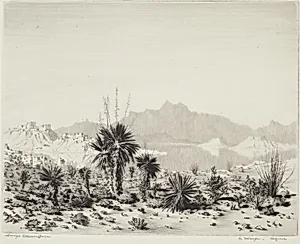
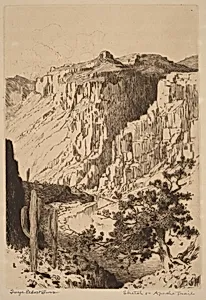
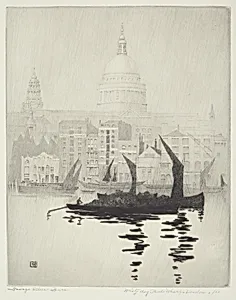
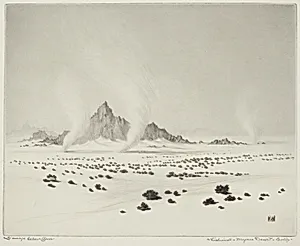
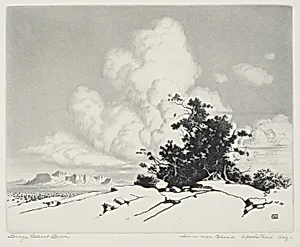
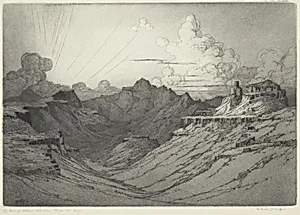
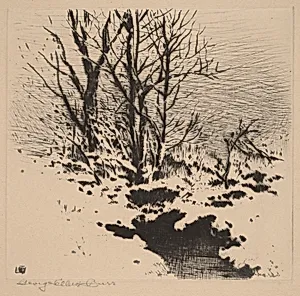
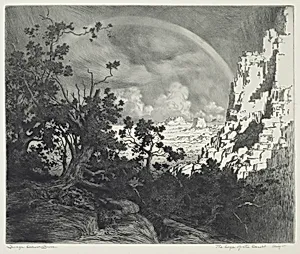
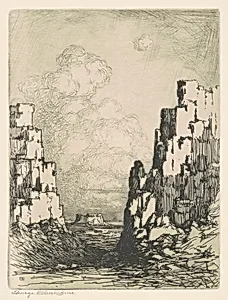
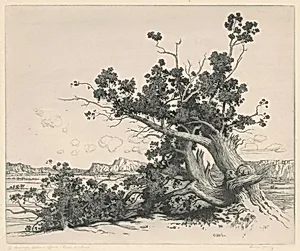
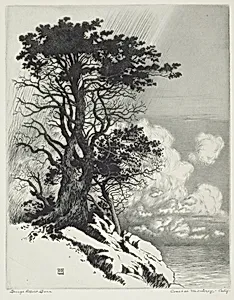
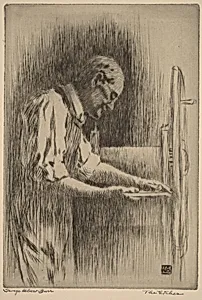
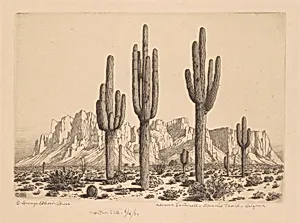
Burr's style is characterized by extraordinary delicacy and atmospheric precision. Whether depicting the arid grandeur of the Arizona desert, the rugged peaks of the Colorado Rockies, or the intimate scale of a desert wildflower, his prints convey a sense of stillness and reverence for the natural world. He worked with fine-gauge needles to achieve gossamer lines, and his mastery of aquatint allowed him to render the soft light of the Western sky with remarkable subtlety. After settling in Denver, Colorado, and later in Phoenix, Arizona, the desert Southwest became his spiritual and artistic home.
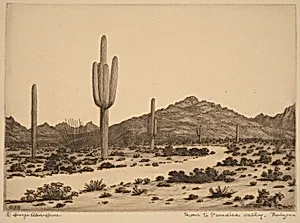
Among his most celebrated works are the series of etchings devoted to the desert landscapes of Arizona, including studies of the saguaro cactus, desert blooms, and the haunting vistas of the Sonoran landscape. His mountain prints, depicting scenes in Colorado and the broader Rocky Mountain region, were equally admired for their technical accomplishment and quiet grandeur. Burr was also a gifted watercolorist, and his works in that medium share the same luminous sensitivity as his prints.
Burr's legacy rests on his role in bringing serious artistic attention to the landscapes of the American Southwest at a time when the region was still largely overlooked by the Eastern art establishment. His prints were collected widely during his lifetime and remain prized by institutions and private collectors alike. He died in 1939, leaving behind a body of work that continues to define the artistic vision of the Western American landscape.