
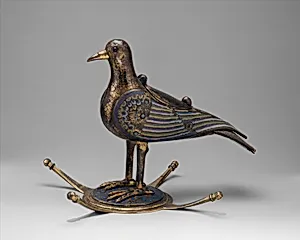
Eucharistic Dove
Unknown Artist
ca. 1215–35
Medium
Gilded copper with champlevé enamel
Dimensions
Overall: 7 1/2 x 7 13/16 x 2 13/16 in. (19 x 19.8 x 7.2 cm) with modern mount: 7 9/16 x 9 3/8 x 6 15/16 in. (19.2 x 23.8 x 17.7 cm) diameter of enameled inner circular base: 3 3/8 in. (8.5 cm)
Classification
Enamels-Champlevé
Culture
French
Department
Medieval Art
Museum
Metropolitan Museum of Art, New York, NY
Credit
Gift of J. Pierpont Morgan, 1917
Accession Number
17.190.344
Rights
Public Domain
Tags
Art Historical Context
Nestled in the glow of gilded copper and vibrant champlevé enamel, *Eucharistic Dove* (ca. 1215–35) is a exquisite from medieval France. Crafted during the Gothic era's spiritual fervor, this dove-shaped vessel—measuring about 7½ inches wide—likely served as a liturgical pyx, holding the consecrated Eucharistic host. Its form evokes the Holy Spirit descending as a dove, a potent Christian symbol of divine presence and peace, perfect for processions or altar use in 13th-century churches. The artistry shines in its champlevé enamel technique, a hallmark of Limoges workshops. Artisans carved channels into the copper base, filled them with powdered glass enamels in rich blues, reds, and golds, then fired it to fuse the colors permanently. Gilding added a heavenly shimmer, making the dove appear almost alive. This method allowed for intricate details, like patterned wings and a circular enameled base, blending metalwork mastery with jewel-like brilliance. Housed in the Metropolitan Museum of Art's Medieval Art department since J. Pierpont Morgan's 1917 gift, this rare treasure offers a window into France's devout craftsmanship. Imagine it soaring above a medieval altar, bridging the earthly and divine for worshippers centuries ago.