
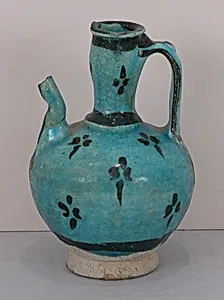
Ewer
Unknown Artist
13th century
Medium
Stonepaste; underglaze painted
Dimensions
H. 5 in. (12.7 cm) Gr. Diam. 3 1/4 in. (8.3 cm)
Classification
Ceramics
Department
Islamic Art
Museum
Metropolitan Museum of Art, New York, NY
Credit
Rogers Fund, 1947
Accession Number
47.85.3
Rights
Public Domain
Art Historical Context
This delicate 13th-century e, a small pitcher designed for pouring liquids like water or rosewater, exemplifies the refined ceramics of the Islamic world. just 5 inches tall with a graceful spout and rounded body, it hails from a golden age of artistic production in regions such as Iran, Syria, or Egypt, where such vessels served both practical purposes—like ritual ablutions before prayer—and as symbols of luxury in households. Crafted from stonepaste (also called fritware), a composite material of quartz, clay, and frit glass, the ewer mimics the translucency of coveted Chinese porcelain, which was unavailable outside East Asia. The underglaze painting technique—where designs were applied directly to the unfired body before glazing and firing—ensured vibrant, durable colors that withstood daily use. This innovation, perfected by Islamic potters from the 10th century onward, allowed for intricate motifs (though specifics here are lost to time) and elevated ceramics to high art. Housed in the Metropolitan Museum of Art's Islamic Art department (Rogers Fund, 1947), this ewer invites us to appreciate the ingenuity of anonymous artisans who blended functionality with beauty, bridging everyday life and cultural splendor in medieval Islam.