
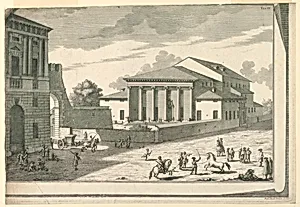
Exterior, Teatro Filarmonico, Verona
Medium
theater
Classification
theater
Department
Smithsonian Collection
Museum
Smithsonian American Art Museum
Credit
Bequest of Erskine Hewitt
Accession Number
1938-57-1449
Rights
Public Domain
About this artwork
Research in Progress
Art Historical Context
Behold the exquisite *Exterior, Teatro Filarmon, Verona* (1731), a masterful theatrical model crafted by Francesco Gall Bibiena (1659–1739), one of Italy's premier Baroque architects and scenic designers from the illustrious Bibiena family. Housed in the Smithsonian American Art Museum through the bequest of collector Erskine Hewitt, work captures the grand facade of Verona's renowned opera house, a hub of 18th-century musical and dramatic splendor. Bibiena, who served European courts from Bologna to Vienna, pioneered "scena per angolo"—an angled perspective technique that created breathtaking depth in stage architecture, blurring the lines between reality and illusion. As a rare surviving example of Bibiena's theatrical models, this piece exemplifies the era's fusion of architecture and performance art. The Teatro Filarmonico, originally opened in 1694, embodied Italy's operatic golden age, hosting premieres by composers like Giuseppe Verdi. Bibiena's design highlights the opulent Baroque style—ornate columns, pediments, and dramatic symmetry—tailored to enchant audiences entering the theater. Such models were essential tools for architects, allowing patrons to visualize ambitious projects before construction. Today, this artifact offers a window into the cultural vibrancy of Enlightenment Europe, where theater was a grand spectacle of innovation and spectacle. Though research continues, its presence reminds us of the Bibienas' enduring legacy in transforming spaces into stages of wonder.