
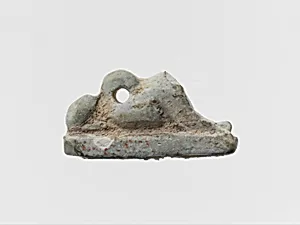
Faience amulet in the form of a lion
Unknown Artist
664–30 BCE
Medium
Clay, glazed
Dimensions
H.: 7/8 in. (2.3 cm)
Classification
Gold and Silver
Culture & Period
Egyptian · Late Dynastic–Hellenistic
Department
Greek and Roman Art
Museum
Metropolitan Museum of Art, New York, NY
Credit
The Cesnola Collection, Purchased by subscription, 1874–76
Accession Number
74.51.4500
Rights
Public Domain
Tags
Art Historical Context
This exquisite faience amulet, as a powerful lion, hails from Egypt's Late Dynastic Hellenistic period (664–30 BCE).ed from glazed clay, it measures just 7/8 inch (2.3 cm) high, making it a delicate personal talisman likely worn as jewelry or carried for protection. Faience, a signature Egyptian material, involves firing quartz-based clay with a vibrant turquoise or blue glaze that precious stones like lapis lazuli—affordable yet dazzling for everyday use. Lions held profound symbolic weight in Egyptian culture, embodying strength, royal authority, and solar power, often linked to deities like Sekhmet, the fierce lioness goddess of war and healing. Such amulets served apotropaic purposes, warding off evil and ensuring the wearer's safety in the perilous journey of life or the afterlife. The unknown artisan's skillful modeling captures the lion's majestic form in miniature, highlighting Egypt's mastery of small-scale sculpture during a time of Ptolemaic rule and cultural fusion with Greek influences. Now part of The Cesnola Collection at The Metropolitan Museum of Art (purchased 1874–76), this piece bridges Egyptian traditions with the broader ancient world, offering visitors a tangible glimpse into the protective magic of antiquity.