
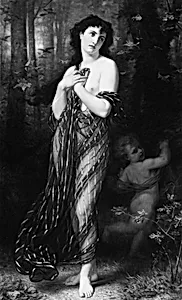
Falling Leaves, Allegory of Autumn
1872
Medium
Oil on canvas
Dimensions
68 7/8 x 43 1/4 in. (174.9 x 109.9 cm)
Classification
Paintings
Department
European Paintings
Museum
Metropolitan Museum of Art, New York, NY
Credit
Catharine Lorillard Wolfe Collection, Bequest of Catharine Lorillard Wolfe, 1887
Accession Number
87.15.107
Rights
Public Domain
Tags
Art Historical Context
Hugues Merle's *Falling Leaves, Allegory Autumn* (1872) captivatingly embodies the fleeting beauty of the season through an allegorical lens. Painted in oil on canvas—a medium prized for its luminous depth and textural richness—this large-scale work (nearly 6 feet tall) features children and female nudes amid swirling autumn leaves, evoking themes of transience and renewal. Merle, a French academic painter trained under Paul Delaroche, specialized in sentimental genre scenes that blended realism with idealized beauty, often showcased at the Paris Salons. Created during France's Second Empire, when allegories of the seasons were popular in decorative arts and painting, this piece reflects the era's fascination with classical motifs reimagined in a romantic, accessible style. The falling leaves symbolize autumn's melancholy abundance, a nod to Baroque traditions while embracing 19th-century naturalism. Merle's soft modeling and warm palette invite viewers to ponder nature's cycles. Acquired through the Catharine Lorillard Wolfe Collection and now in the Metropolitan Museum of Art's European Paintings department, *Falling Leaves* exemplifies the Gilded Age taste for grand, narrative-driven canvases. It's a delightful window into how Victorian-era audiences cherished art that humanized the seasons.