
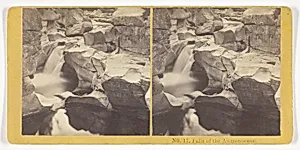
Falls of the Ammonoosuc
1855/75
Medium
Albumen print, stereo
Dimensions
Each image: 7.6 × 7.6 cm (3 × 3 in.); Card: 8.2 × 17 cm (3 1/4 × 6 3/4 in.)
Classification
photography
Department
Photography and Media
Museum
Art Institute of Chicago
Accession Number
198774
Rights
Public Domain
Art Historical Context
Created around the mid-19th century by the Kilburn Brothers,Falls of the Amosuc* captures the dramatic rush of water in a New Hampshire landscape through the innovative medium of a stereoscopic albumen print. double-image format, mounted on a card designed for a handheld viewer, was a popular for audiences to experience faraway places in vivid three dimensions. The square images, each just three inches across, invite close looking while the larger card provides an intimate, portable viewing experience. Stereoscopic photography flourished during this period as both entertainment and education, allowing viewers to feel immersed in natural wonders without leaving home. The albumen process, which uses egg-white coatings to hold the photographic emulsion, gave these prints their characteristic warm tones and fine detail. By presenting the waterfall in stereo, the Kilburn Brothers transformed a fleeting moment into a lasting sense of depth and movement. Today the work offers a window into how early photographers helped shape public fascination with the American landscape, turning remote into shared visual experiences that bridged science, art, and travel.