
Fan
1715–25
Medium
ivory, mother-of-pearl, parchment, gouache, paint
Classification
Fan
Culture
Dutch
Department
Costume Institute
Museum
Metropolitan Museum of Art, New York, NY
Credit
Brooklyn Museum Costume Collection at The Metropolitan Museum of Art, Gift of the Brooklyn Museum, 2009; Gift of Millicent V. Hearst, 1962
Accession Number
2009.300.2028
Rights
Public Domain
Tags
Art Historical Context
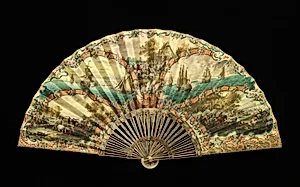
This exquisite fan, crafted by Dutch artist Carl Gustav Klingstedt between1715 and 1725, exemplifies the opulent hand-held accessories of the early 18th century. Made from ivory, mother-of-pear, parchment, gouache, and paint, showcases luxurious materials typical of high-society fashion. Fans like this were not mere utilities for cooling or modesty; they served as portable canvases for storytelling, flaunted at courtly gatherings and social events across Europe. The delicately painted scenes, featuring dynamic battles with horses, ships, and soldiers, capture the era's fascination with military triumphs and naval prowess—echoing the Dutch Republic's storied maritime history during the lingering echoes of its Golden Age. Klingstedt's gouache technique on parchment allowed for vibrant, translucent colors and fine details, bringing the chaos of combat to life in a surprisingly intimate format. Housed in The Metropolitan Museum of Art's Costume Institute, this fan highlights the intersection of art and attire, revealing how everyday objects became status symbols. Its journey from Millicent V. Hearst's collection to the Brooklyn Museum and now the Met underscores its enduring allure as a window into 18th-century Dutch elegance and bravado.