
Fan
Unknown Artist
second quarter 19th century
Medium
Ivory, parchment
Classification
Fan
Culture
European
Department
Costume Institute
Museum
Metropolitan Museum of Art, New York, NY
Credit
Brooklyn Museum Costume Collection at The Metropolitan Museum of Art, Gift of the Brooklyn Museum, 2009; Gift of George Arents in memory of Annie Walter Arents, 1949
Accession Number
2009.300.4592
Rights
Public Domain
Tags
Art Historical Context
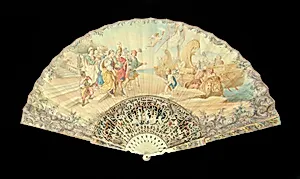
This elegant fan, crafted in the second quarter of the19th century by an unknown European artist, the exquisite handiwork of Regency-era accessories. Fashioned from delicate ivory for the sticks and guards, with a parchment leaf, it highlights the technical mastery of materials prized for their lightness and translucency. Ivory, sourced from elephant tusks, allowed for intricate carving, while parchment a smooth surface ideal for painting or gilding—common techniques that elevated fans from mere utilities to fashionable statements. The fan's artwork, adorned with scenes of men, women, Cupid, and ships, evokes romantic narratives blending mythology and maritime adventure. Cupid, the god of love, amid elegant figures and vessels, suggests themes of courtship or seafaring romance, popular in the Romantic period when fans served as subtle tools for flirtation through a coded "language of the fan." Worn by both men and women at balls and social gatherings, these objects were essential to 19th-century European etiquette and display. Housed in The Metropolitan Museum of Art's Costume Institute from the Brooklyn Museum collection, this fan offers a glimpse into the artistry of personal adornment, preserving the glamour of bygone social rituals.