
Fan
Unknown Artist
1860–69
Medium
Ivory, metallic, metal, glass, paper, mother-of-pearl
Classification
Fan
Culture
probably Spanish
Department
Costume Institute
Museum
Metropolitan Museum of Art, New York, NY
Credit
Brooklyn Museum Costume Collection at The Metropolitan Museum of Art, Gift of the Brooklyn Museum, 2009; Gift of J. Townsend Russell, 1959
Accession Number
2009.300.5068
Rights
Public Domain
Tags
Art Historical Context
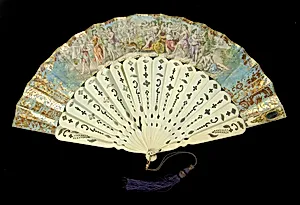
This exquisite fan, crafted between 1860 and 1869 by an unknown artist, likely hails from Spain and exemplifies the opulent fashion accessories of the mid-19th century. Fans were indispensable for women during this era, serving not just for cooling in stifling social gatherings but also as tools for subtle communication through a coded "language of the fan." Adorned with luxurious materials—ivory for the sticks, shimmering mother-of-pearl inlays, metallic accents, glass elements, and delicate paper— it reflects the era's fascination with eclectic, jewel-like craftsmanship, blending functionality with high artistry. The fan's decorative motifs, featuring women, leopards, and chariots, evoke exotic and possibly mythological themes popular in Romantic-era decorative arts. Leopards, symbols of wild luxury and often linked to classical bacchanals, paired with dynamic chariots and elegant female figures, suggest a narrative of adventure or revelry. Such imagery on fans highlighted the wearer's sophistication and taste for the dramatic. Housed in the Metropolitan Museum of Art's Costume Institute from the Brooklyn Museum collection, this piece underscores the cultural role of fans in Spanish and European society, where they signified status and femininity. Its preservation offers a glimpse into the tactile splendor of 19th-century personal adornment.