
Fan
1800-1830
Medium
Decorative Arts
Classification
Decorative Arts
Department
Smithsonian Collection
Museum
Smithsonian American Art Museum
Credit
Smithsonian American Art Museum, Bequest of Alfred Duane Pell
Accession Number
1939.4.1019
Rights
Public Domain
Tags
Art Historical Context
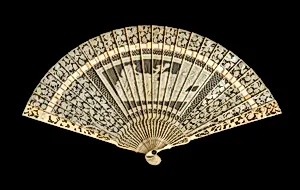
This delicate French fan, created by an unidentified artist between 1800 and1830, captures the elegance of early 19th-century decorative arts during France's Napoleonic and Restoration eras. Fans were more than mere accessories; they were coveted status symbols for women, used to cool oneself, flirt through a coded "language of the fan," and display artistic taste. Crafted likely from fine paper or silk mounted on ornate sticks, such objects blended functionality with opulent decoration, reflecting the era's neoclassical revival inspired by ancient Greece and Rome. The fan's charming motifs—frolicking putti (cherubic figures symbolizing love and play), a majestic horse, and a chariot—evoke classical mythology, perhaps alluding to Apollo's sun chariot or triumphant gods. These hand-painted or gilded scenes, common in French fan production, showcase meticulous techniques like gouache or watercolor on vellum, highlighting the artisan's skill in miniature storytelling. Such designs bridged Rococo whimsy with Empire-style grandeur, making the fan a portable work of art. Now housed in the Smithsonian American Art Museum through the bequest of collector Alfred Duane Pell, this piece invites visitors to appreciate how everyday luxury items preserved cultural fantasies of antiquity amid revolutionary change. (198 words)
About the Artist
Unidentified (French)
Georges Hugnet (1906–1974) was a multifaceted French artist, poet, writer, and critic whose innovative collages and graphic works bridged Dada and Surrealism. Born in Paris on July 11, 1906, he spent much of his early childhood in Buenos Aires, Argentina, returning to France around 1913. His early life and artistic training remain sparsely documented, with no records of formal art school attendanc...