
Farhad and Shirin
first half 17th century
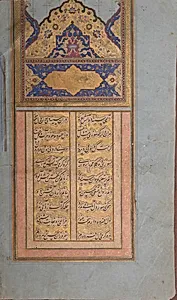
Medium
Ink, opaque watercolor, and gold on paper; leather binding
Classification
Codices
Department
Islamic Art
Museum
Metropolitan Museum of Art, New York, NY
Credit
Gift of Vladimir G. Simkhovitch, 1923
Accession Number
23.28
Rights
Public Domain
Art Historical Context
"Farhad and Shirin a exquisite codex created by the Persian poet Vahshi Bafqi in the first half of the 17th century captures the timeless romance of one of Persia's most beloved epic tales. This leather-bound manuscript, adorned with ink, opaque watercolor, and gold on paper hails from the Safavid era, a golden age of Islamic art in Iran known for its refined poetry and intricate book arts. Vahshi Bafqi, a master of classical Persian verse, retells the legendary love story of the sculptor Farhad and Princess Shirin, drawing from earlier sources like Nizami's poetry, infusing it with emotional depth and lyrical beauty. As a codex in the Islamic manuscript tradition, this work exemplifies the artistry of Safavid illuminators, who blended calligraphy with vivid miniatures. The use of opaque watercolors—rich gouache pigments—creates luminous scenes of passion and tragedy, while gold accents add a divine sparkle, evoking the opulence of royal courts. Such volumes were prized possessions, often commissioned for scholars or patrons, preserving oral epics in tangible form. Today, housed in the Metropolitan Museum of Art's Islamic Art Department (gift of Vladimir G. Simkhovitch, 1923), "Farhad and Shirin" invites visitors to immerse in a world where words and images dance together, bridging 17th-century Persia with universal themes of love and longing.