
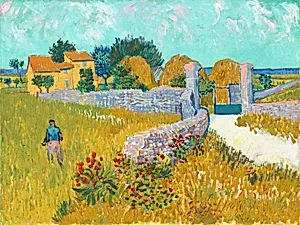
Farmhouse in Provence
1888
Medium
oil on canvas
Dimensions
overall: 46.1 x 60.9 cm (18 1/8 x 24 in.) framed: 74.9 x 88.9 x 10.8 cm (29 1/2 x 35 x 4 1/4 in.)
Classification
Painting
Department
CF
Museum
National Gallery of Art, Washington, D.C.
Credit
Ailsa Mellon Bruce Collection
Accession Number
1970.17.34
Rights
Public Domain
Art Historical Context
Vincent van Gogh painted *Farmhouse in Provence* in 1888 while living in Arles, in the south of France. This period marked a transformative chapter in his career, as he sought the brilliant Mediterranean light and rural subjects that would define his mature work. The oil-on-canvas medium allowed him to apply pigment with energetic, visible brushstrokes, capturing both the texture of the landscape and his emotional response to it. As a leading figure of Post-Impressionism, Van Gogh moved beyond the optical effects of Impressionism to emphasize personal expression through color and form. Here, the modest dimensions—roughly 18 by 24 inches—invite intimate viewing, drawing visitors close to appreciate the rhythmic patterns and vibrant palette that convey the warmth and vitality of Provençal farm life. Now part of the National Gallery of Art’s collection through the Ailsa Mellon Bruce bequest, the painting exemplifies Van Gogh’s ability to transform everyday scenes into powerful statements of resilience and beauty, reflecting both his artistic innovation and his deep connection to the natural world.
About the Artist
Vincent van Gogh · 1853–1890
Vincent Willem van Gogh (1853-1890) stands as one of the most influential figures in Western art history, despite a career spanning merely a decade. Born in Groot-Zundert, Netherlands, to a Protestant pastor's family, van Gogh's path to artistic greatness was anything but conventional. His early adulthood saw him working as an art dealer for Goupil & Cie, a language teacher, and a fervent missiona...