
Feline Figure
1100–1470
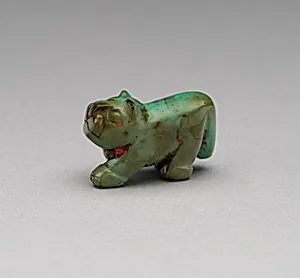
Medium
Turquoise with cinnabar
Dimensions
1.5 × 2.3 cm (9/16 × 7/8 in.)
Classification
stone
Department
Arts of the Americas
Museum
Art Institute of Chicago
Accession Number
59385
Rights
Public Domain
Art Historical Context
Nestled in the Arts of the Americas collection at the Art Institute of Chicago this exquisite *Feline Figure* from Chimú culture (110–1470) captivates with its miniature scale—just 1.5 × 2.3 cm—and materials. Carved from precious turquoise and accented with cinnabar, vivid red pigment derived from mercury sulfide, the sculpture depicts a stylized feline, likely evoking the powerful puma or jag revered in Andean cosmology. The Chimú, who flourished on Peru's north coast before their conquest by the Inca, were master artisans known for intricate stonework, goldsmithing, and ceramics. Turquoise, rare in the region and often sourced through trade, symbolized elite status and divine connection, while cinnabar added ritualistic intensity. This tiny carving exemplifies their skill in hard-stone lapidary techniques, transforming unyielding material into a dynamic form with incised details suggesting fur, eyes, and fangs. Likely worn as an amulet, earspool, or ritual ornament, the figure underscores the Chimú's animistic worldview, where felines embodied strength, fertility, and supernatural protection. Its survival offers a glimpse into a thriving pre-Columbian society, reminding us of the enduring allure of ancient craftsmanship.
About the Artist
Chimú
The Chimú, a preeminent pre-Columbian culture of Peru's northern coast, flourished from approximately 900 to 1470 CE as the Kingdom of Chimor, emerging in the wake of the Moche civilization's decline and incorporating influences from the Sican, Wari, and Cajamarca cultures. Centered in the vast adobe metropolis of Chan Chan—the largest city in the Americas before the Inca, housing up to 60,000 peo...