
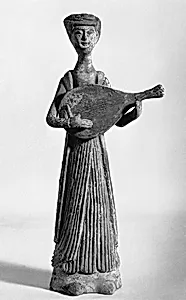
隋 陶持琵琶女楽伎俑|Female musician with a lute
Unknown Artist
6th century
Medium
Earthenware with traces of pigment
Dimensions
H. 9 in. (22.9 cm)
Classification
Tomb Pottery
Culture & Period
China · Sui dynasty (581–618)
Department
Asian Art
Museum
Metropolitan Museum of Art, New York, NY
Credit
Gift of Mrs. Edward S. Harkness, 1934
Accession Number
34.141.1
Rights
Public Domain
Tags
Art Historical Context
This charming earthenware figurine, titled *Female Musician with a Lute hails from China's Sui (581–618), pivotal era that reunified the fractured empire after centuries of division. Standing just 9 inches tall, this tomb pottery—known as *mingqi*—depicts a graceful female musician holding a pipa, a pear-shaped lute central to ancient Chinese music. Such figures were crafted to accompany the deceased into the afterlife, providing eternal entertainment and reflecting the elite's love for refined arts. Made from earthenware with faint traces of original pigment, the sculpture showcases the Sui period's adept low-fired clay techniques, often involving molds for mass production to furnish lavish tombs. The figure's poised stance and detailed attire evoke the cosmopolitan flair of the dynasty, influenced by Buddhism and Central Asian trade along the Silk Road. Musicians like her highlight music's cultural prestige, with the pipa symbolizing harmony and courtly sophistication. Gifted to the Metropolitan Museum of Art in 1934, this piece offers a vivid glimpse into 6th-century daily life and beliefs, reminding us how art bridged the living world and eternity.