
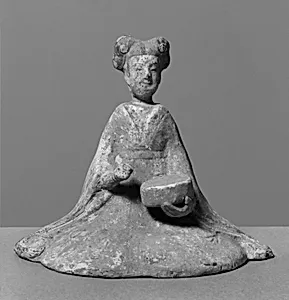
隋 彩繪陶持鼓伎樂女俑|Female musician with drum
Unknown Artist
6th–7th century
Medium
Earthenware with pigment
Dimensions
H. 5 1/2 in. (14 cm); W. 4 1/2 in. (11.4 cm)
Classification
Tomb Pottery
Culture & Period
China · Sui dynasty (581–619)
Department
Asian Art
Museum
Metropolitan Museum of Art, New York, NY
Credit
Rogers Fund, 1925
Accession Number
25.82.5
Rights
Public Domain
Tags
Art Historical Context
This charming earthenware figurine, titled *Female Musician with Drum*, hails from China's Sui dynasty (581–), a pivotal era that reunited the fractured empire after centuries of division. Standing just 5½ inches tall, this tomb pottery—known as *mingqi*—depicts a lively female musician poised with a drum, her form painted in vibrant pigments that have endured for over 1,400 years. Crafted as a funerary offering, such figures were placed in tombs to entertain the deceased in the afterlife, reflecting beliefs in a harmonious eternal existence filled with music and revelry. The Sui period marked a renaissance in Chinese art, blending Northern and Southern styles with innovative ceramic techniques. Low-fired earthenware like this allowed for detailed modeling of expressive faces and flowing garments, while the applied pigments—likely mineral-based reds, blacks, and whites—brought the scene to life. Musicians, especially women, symbolized refinement and joy, underscoring the cultural value placed on orchestral ensembles in elite burials. Acquired by the Metropolitan Museum of Art through the Rogers Fund in 1925, this petite treasure offers a window into Sui society's blend of spirituality and artistry. Imagine her drumbeat echoing through an ancient tomb, a timeless nod to the enduring rhythm of Chinese heritage.