
霊彩筆 豊干寒山拾得図|Fenggan, Hanshan, and Shide
first half of the 15th century
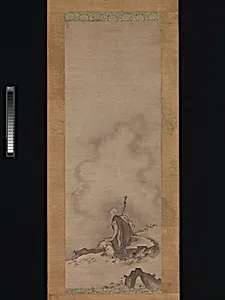
Medium
Pair of hanging scrolls; ink and color on paper
Dimensions
Image (a): 37 7/8 × 13 5/8 in. (96.2 × 34.6 cm) Overall with mounting (a): 72 15/16 × 18 11/16 in. (185.3 × 47.5 cm) Overall with knobs (a): 72 15/16 × 20 5/16 in. (185.3 × 51.6 cm) Image (b): 37 15/16 × 13 9/16 in. (96.3 × 34.5 cm) Overall with mounting (b): 72 5/8 × 18 11/16 in. (184.5 × 47.4 cm) Overall with knobs (b): 72 5/8 × 20 1/4 in. (184.5 × 51.5 cm)
Classification
Paintings
Culture & Period
Japan · Muromachi period (1392–1573)
Department
Asian Art
Museum
Metropolitan Museum of Art, New York, NY
Credit
Mary Griggs Burke Collection, Gift of the Mary and Jackson Burke Foundation, 2015
Accession Number
2015.300.46a, b
Rights
Public Domain
Tags
Art Historical Context
This exquisite pair of hanging scrolls, *Fenggan, Hanshan, Shide*, was created by the Japanese artist Reisai in the first half of 15th century during the Muromachi period1392–1573). Rendered in ink and color on paper, the works measure approximately 38 x 14 inches each in their image areas, designed for dramatic display when mounted and fitted with knobs. Now housed in the Metropolitan Museum of's Asian Art Department as part of the Mary Griggs Burke Collection, they exemplify the refined elegance of Muromachi painting. The scrolls depict three legendary figures from Zen Buddhist lore: the reclusive poets Hanshan and Shide, accompanied by their tiger-riding mentor Fenggan. Revered in Chan (Zen) traditions imported from China, these eccentrics symbolized spiritual freedom and poetic wisdom, often portrayed in Japanese art to inspire contemplation. Reisai's composition captures their whimsical, otherworldly bond, blending delicate ink lines with subtle colors—a technique blending Chinese literati influences with Muromachi subtlety. Hanging scrolls like these were prized in Zen temples and elite residences, unrolled for meditation or gatherings. Their cultural importance lies in promoting Zen ideals amid Japan's turbulent era, offering timeless insight into enlightenment's playful side. A true gem for visitors seeking the soul of Japanese ink painting!
About the Artist
Reisai · 1700–1899
Reisai was a Japanese artist active during the 18th and 19th centuries, best known for his contributions to surimono, the refined privately commissioned woodblock prints often produced for New Year greetings or literary circles. His works typically feature delicate ink and color on paper, incorporating playful or symbolic imagery alongside poetry. The Metropolitan Museum of Art holds examples of h...