
Fibula
Unknown Artist
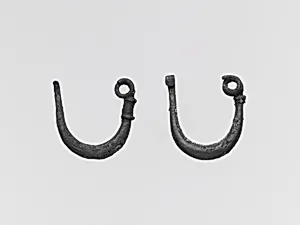
Medium
Silver
Dimensions
Other: 1 1/16 × 1 1/8 × 3/16 in., 0.224oz. (2.8 × 2.8 × 0.5 cm, 6.352g)
Classification
Gold and Silver
Culture
Cypriot
Department
Greek and Roman Art
Museum
Metropolitan Museum of Art, New York, NY
Credit
The Cesnola Collection, Purchased by subscription, 1874–76
Accession Number
74.51.3205
Rights
Public Domain
Art Historical Context
This delicate silver fibula, a clasp-like brooch from ancient Cyp culture, exemplifies the everyday artistry of the Mediterranean world. Measuring just over an inch across, it was designed to fasten garments, much like a modern safety pin but crafted with the precision of skilled metalworkers. Its small size—1 1/16 × 1 1/8 × 3/16 inches and weighing a mere 0.224—highlights the finesse required to shape silver into a functional yet elegant object, blending utility with subtle decoration. Housed in the Metropolitan Museum of Art's Greek and Roman Art Department as part of the renowned Cesnola Collection (acquired by subscription in 1874–76), this piece offers a window into Cypriot craftsmanship. Cyprus, a cultural crossroads influenced by Greek, Phoenician, and Near Eastern traditions, produced such jewelry as status symbols and practical accessories. Though the artist and exact date remain unknown, fibulae like this were widespread in antiquity, underscoring the region's advanced metallurgy and trade networks. Visitors will appreciate how this unassuming artifact reveals the ingenuity of ancient lives—imagine it securing a tunic on a bustling Cypriot street, a tiny testament to enduring human creativity.