
Fibula, fragment
Unknown Artist
7th–6th century BCE
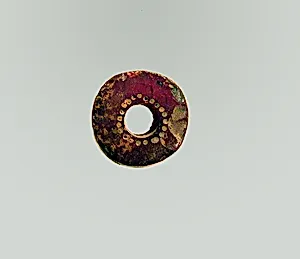
Medium
Amber
Dimensions
Diameter: 11/16 x 3/8 in. (1.8 x 1 cm)
Classification
Miscellaneous-Amber
Culture & Period
Etruscan · Archaic
Department
Greek and Roman Art
Museum
Metropolitan Museum of Art, New York, NY
Credit
Purchase, 1896
Accession Number
96.9.498
Rights
Public Domain
Art Historical Context
This delicate amber fibula fragment, to the 7th–6th century BCE offers a glimpse into the sophisticated world of Archaic Etruscan craftsmanship. Crafted by an unknown artist, this small jewelry piece—measuring just 11/16 x 3/8 inches (1.8 x 1 cm)—was likely part of a brooch used to fasten garments, a common accessory among the Etruscans, an advanced Iron Age civilization in central Italy that thrived before Roman dominance. Amber, sourced from Baltic trade routes, held immense value in the ancient Mediterranean for its warm golden glow and translucency, often symbolizing solar deities or protective amulets. Etruscans excelled in working this organic resin, carving it into intricate forms that showcased their mastery of subtle techniques without metal tools. This fragment exemplifies their jewelry artistry, blending functionality with ornamentation during a period of cultural flourishing influenced by Greek and Near Eastern styles. Acquired by the Metropolitan Museum of Art in 1896, this rare survivor highlights Etruscan contributions to early European adornment, reminding us how everyday objects carried deep cultural prestige. Though fragmented, it evokes the vibrancy of ancient lives.