
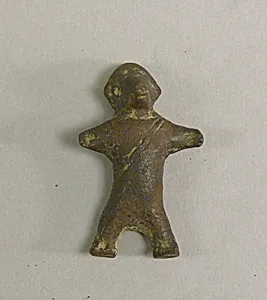
Figure
Unknown Artist
500 BCE–300 CE
Medium
Bronze
Dimensions
H. 1 3/4 in. (4.4 cm); W. 1 1/8 in. (2.9 cm)
Classification
Metalwork
Culture & Period
Indonesia · Bronze and Iron Age period
Department
Asian Art
Museum
Metropolitan Museum of Art, New York, NY
Credit
Samuel Eilenberg Collection, Bequest of Samuel Eilenberg, 1998
Accession Number
2001.433.531
Rights
Public Domain
Art Historical Context
This petite bronze *Figure*, measuring a mere 1¾ inches (4.4 cm) in height, originates from ancient Indonesia during the Bronze and Iron (500 BCE–300 CE). Craft by an unknown artist, it belongs to the Metropolitan Museum of's Asian Art Department, through the Samuel Eilenberg in 1998. Its small scale suggests it may have been a portable votive object, amulet, or ritual accessory, common in early Southeast Asian metalwork traditions. Bronze, an alloy of copper and tin revolutionized craftsmanship in this era, enabling intricate casting techniques like the lost-wax method. This allowed artisans to create durable, detailed forms that captured human or symbolic figures, blending functionality with artistry. In Indonesia's Bronze and Iron Age, such works marked a technological leap, linking local cultures to broader regional exchanges, possibly influenced by trade networks across the archipelago. Housed in the Met's vast collection of metalwork, this enigmatic sculpture invites us to ponder the daily spiritual lives of prehistoric Indonesians. Though its exact subject remains a mystery, it stands as a testament to the ingenuity of early metallurgists, preserving a whisper of antiquity for modern eyes.