
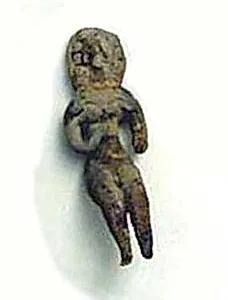
Figure of Fertility Goddess
Unknown Artist
ca. 2700–3000 BCE
Medium
Terracotta
Dimensions
H. 4 3/4 in. (12.1 cm); W. 1 1/2 in. (3.8 cm); D. 1 7/8 in. (4.8 cm)
Classification
Ceramics
Culture
Baluchistan
Department
Asian Art
Museum
Metropolitan Museum of Art, New York, NY
Credit
Gift of Jeannette and Jonathan Rosen, 2001
Accession Number
2001.794.223
Rights
Public Domain
Tags
Art Historical Context
This petite terracotta figurine, just under 5 inches tall, embodies a Fertility Goddess from ancient Baluchistan, dating to around 3000–2700 BCE. Craft during the early phases of the Indus Valley Civilization of the world's earliest urban societies—this figure reflects the region's deep reverence for deities tied to abundance and reproduction. Discovered in the arid landscapes of modern-day Pakistan, it joins a tradition of small clay votives that dotted households and shrines, offering portable symbols of protection and prosperity. The unknown artisan hand-modeled the clay, likely firing it in open pits to create a durable, reddish-brown surface. Stylized features—exaggerated hips, prominent breasts, and a simplified form—emphasize fertility, evoking the life-giving forces essential to an agrarian people reliant on the Indus River's floods. Such figures, common across Indus sites like Mohenjo-Daro, suggest widespread goddess worship predating later Hindu traditions, blending spirituality with daily life. Today, this gift to the Metropolitan Museum of Art invites us to ponder the timeless human quest for fertility and renewal, bridging 5,000 years to our own era.