
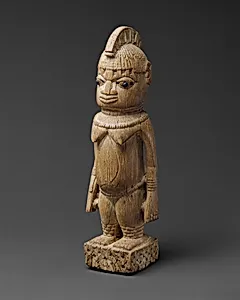
Figure: Female
Unknown Artist
18th century
Medium
Ivory, metal
Dimensions
H. 13 x W. 3 7/8 x D. 3 5/8 in. (33 x 9.9 x 9.2 cm)
Classification
Bone/Ivory-Sculpture
Culture
Edo peoples
Department
Arts of Africa, Oceania, and the Americas
Museum
Metropolitan Museum of Art, New York, NY
Credit
The Michael C. Rockefeller Memorial Collection, Gift of Nelson A. Rockefeller, 1972
Accession Number
1978.412.302
Rights
Public Domain
Tags
Art Historical Context
This exquisite 18th-century ivory figure of a female, crafted by an unknown Edo artist from the Kingdom of Benin (present-day Nigeria), stands as a testament to the sophisticated artistry of West African royal courts. Carved from ivory with metal accents, the 13-inch sculpture captures a graceful nude female form, likely intended for ritual or commemorative use on ancestral altars. The Edo peoples, renowned for intricate bronze and ivory works, produced such pieces to honor queens, priestesses, or royal attendants, reflecting the kingdom's hierarchical society and spiritual beliefs during a period of cultural flourishing under powerful Obas (kings). The medium of ivory—prized for its creamy texture and workability—allowed artisans to achieve remarkable detail in the figure's stylized proportions, elongated neck, and poised stance, hallmarks of Benin sculptural style. Metal elements, possibly brass or copper, add symbolic prestige, evoking the gleam of royal regalia. These techniques highlight the Edo mastery of subtraction carving, where material is meticulously removed to reveal form, blending functionality with aesthetic power. Housed in The Metropolitan Museum of Art's Michael C. Rockefeller Memorial Collection, this figure invites visitors to ponder the enduring legacy of Benin art, once looted during colonial times but now celebrated for its global influence on modern sculpture. A captivating window into pre-colonial Africa, it reminds us of the artistry behind everyday reverence.