
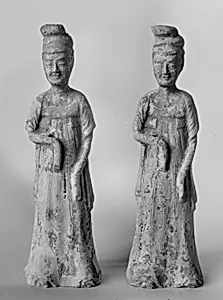
唐 陶侍女俑|Figure of a female attendant
Unknown Artist
7th–8th century
Medium
Earthenware
Dimensions
H. 7 7/8 in. (20 cm)
Classification
Tomb Pottery
Culture & Period
China · Tang dynasty (618–907)
Department
Asian Art
Museum
Metropolitan Museum of Art, New York, NY
Credit
Rogers Fund, 1919
Accession Number
19.141.1
Rights
Public Domain
Tags
Art Historical Context
This charming earthenware figure of a female attendant, crafted during the Tang dynasty (618–907), embodies the era's prosperity and reverence for the afterlife. Standing just 7⅞ inches tall, she was likely placed in a tomb as mingqi—spirit objects meant to serve the deceased in the next world. The Tang period, often called China's golden age, saw vibrant cultural exchanges along the Silk Road, influencing art with cosmopolitan flair. These tomb figures, mass-produced yet exquisitely detailed, reflect the dynasty's belief in providing comforts beyond death. Modeled in low-fired earthenware, the attendant captures Tang ideals of feminine beauty: a plump, graceful form clad in flowing robes with intricate folds, her posture poised and serene. Artisans used molds and hand-finishing techniques to achieve lifelike expressions and elaborate hairstyles piled high with ornaments, showcasing advanced ceramic skills. Unglazed surfaces preserve the earthy tones, highlighting the figure's tactile realism. Housed in the Metropolitan Museum of Art's Asian Art Department since 1919, this piece offers a window into Tang society's opulent burial customs and artistic mastery. Visitors can't help but admire how such small sculptures bring ancient lives vividly to life.