
Standing Farmer holding a Pitchfork
Unknown Artist
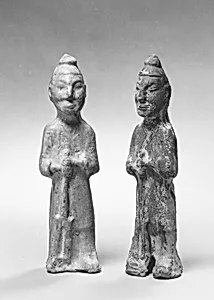
Medium
Earthenware with green lead glaze
Dimensions
H. 10 1/2 in. (26.7 cm)
Classification
Tomb Pottery
Culture & Period
China · Neolithic period to Ming dynasty (1368–1644)
Department
Asian Art
Museum
Metropolitan Museum of Art, New York, NY
Credit
Charlotte C. and John C. Weber Collection, Gift of Charlotte C. and John C. Weber, 1994
Accession Number
1994.605.93
Rights
Public Domain
Tags
Art Historical Context
This charming earthenware figurine, titled *Standing Farmer Holding Pitchfork*, stands just 10½ inches tall and exemplifies ancient Chinese tomb pottery traditions. Crafted from earthenware coated in a vibrant green lead glaze technique that emerged prominently from the Han dynasty onward—the piece captures a humble farmer in a poised, upright stance, pitchfork in hand. Its modest size and glossy finish highlight the accessibility and mass production of such ceramics, which were fired at relatively low temperatures to achieve durability and color. Spanning China's Neolithic period through the Ming dynasty (1368–1644), tomb pottery like this served a vital funerary role as *mingqi*—spirit objects meant to accompany the deceased into the afterlife. Farmers, alongside warriors, attendants, and animals, represented the everyday workforce ensuring prosperity in the next world. This broad timeline reflects evolving artistic styles, from the stylized forms of early dynasties to more naturalistic Ming figures, underscoring China's enduring belief in continuity between life and death. From the Charlotte C. and John C. Weber Collection at The Metropolitan Museum of Art, this unknown artist's work offers a window into rural life and spiritual practices, reminding us how ordinary laborers were immortalized in clay for eternity. A delightful glimpse into ancient ingenuity!