
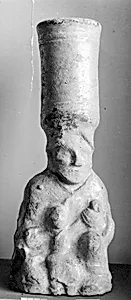
Figure of a Man
Unknown Artist
Medium
Pottery
Dimensions
H. 11 1/2 in. (29.2 cm)
Classification
Tomb Pottery
Culture & Period
China · Han dynasty (206 B.C.–A.D. 220)
Department
Asian Art
Museum
Metropolitan Museum of Art, New York, NY
Credit
Gift of C. M. McGrath, 1924
Accession Number
24.184
Rights
Public Domain
Tags
Art Historical Context
This small pottery figure of a man, standing just over eleven inches tall, was created during China’s Han dynasty (206 B.C.–A.D. 220). Classified as tomb pottery, it belongs to a long tradition in which ceramic figures were placed in graves to serve the deceased in the afterlife. Such objects reveal the Han belief that the spirit world mirrored the living one, requiring attendants, servants, and guardians to ensure comfort and protection after death. Although the artist remains unknown, the figure’s simple yet expressive form reflects the practical artistry of Han potters. Working in clay allowed for quick production of large numbers of tomb figures, which were often painted or glazed before firing. These modest sculptures provide modern viewers with glimpses of daily Han attire, hairstyles, and postures, even when individual identities have been lost to time. Donated to the Metropolitan Museum in 1924, the piece now offers visitors a tangible connection to ancient Chinese funerary customs. Its presence in the collection underscores how even small, unassuming objects can illuminate the spiritual hopes and artistic practices of an entire era.