
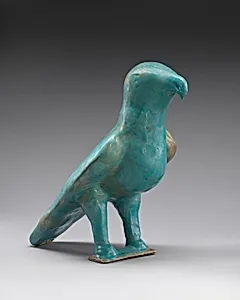
Figure of a Predatory Bird
Unknown Artist
12th–13th century
Medium
Stonepaste; monochrome glazed
Dimensions
H. 14 3/4 in. (37.5 cm) W. 14 1/2 in. (36.8 cm) D. 9 1/4 in. (23.5 cm)
Classification
Ceramics
Department
Islamic Art
Museum
Metropolitan Museum of Art, New York, NY
Credit
Gift of Joan L. Simon, Elizabeth L. Eisenstein, Virginia L. Kahn, Dr. Marjorie G. Lewisohn, 1954
Accession Number
54.152.2
Rights
Public Domain
Tags
Art Historical Context
This striking *Figure of a Predatory*, crafted in the 12th–13th, exemplifies the ingenuity of Islamic ceramic artistry. Carved from stonepaste—a composite material of quartz, clay, and frit developed in the Islamic world—this monochrome-glazed sculpture stands at nearly 15 inches tall, capturing the fierce poise of a raptor in mid-stride or perch. Housed in the Metropolitan Museum of Art's Art Department, it was generously gifted in 1954 by a group of donors including Joan L. Simon and others. Stonepaste ceramics emerged around this period, primarily in regions like Iran and Syria, as artisans sought to mimic the translucency of Chinese porcelain while adapting to local materials. The monochrome glaze, often in vibrant turquoise or cobalt hues typical of the era, not only protected the friable body but also lent a luminous, jewel-like quality, enhancing the bird's dynamic form. This technique marked a pinnacle of Islamic innovation, blending sculptural volume with glossy surface elegance. Predatory birds held symbolic power in medieval Islamic culture, evoking falconry's noble pursuits and the majesty of nature. Though the artist remains unknown, this piece invites visitors to ponder the fusion of utility, symbolism, and technical mastery in everyday luxury objects from a golden age of craftsmanship.