
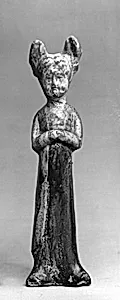
唐 釉陶侍女俑|Figure of a standing woman
Unknown Artist
7th–8th century
Medium
Eartheware with polychrome glaze (Sancai ware)
Dimensions
H. 9 in. (22.9 cm)
Classification
Tomb Pottery
Culture & Period
China · Tang dynasty (618–907)
Department
Asian Art
Museum
Metropolitan Museum of Art, New York, NY
Credit
Rogers Fund, 1910
Accession Number
10.221.4
Rights
Public Domain
Tags
Art Historical Context
This exquisite Figure of a Standing Woman, crafted during China's Tang dynasty (618–), exemplifies the era's artistic brilliance and cultural optimism. Standing just 9 inches tall, this earthenware tomb pottery (mingqi) depicts graceful female attendant, her posture poised and elegant, ready to serve in the afterlife. Produced anonymously by skilled artisans, it belongs to the renowned Sancai ware tradition—named for its signature tri-color polychrome glazes of amber-yellow, green, and creamy white—fired at low temperatures to create vibrant, flowing effects that mimic silk robes and jewelry. The Tang dynasty marked a golden age of prosperity, cosmopolitanism, and artistic innovation, with Chang'an as a bustling Silk Road hub. Tomb figures like this one were essential grave goods, believed to provide companionship and labor for the deceased, reflecting Confucian and Daoist views of the afterlife. Women in Tang art often embodied beauty and refinement, influenced by foreign styles from Central Asia. Sancai's glazing technique was revolutionary, layering lead-based fluxes for luminous, iridescent finishes that captured light beautifully. Acquired via the Rogers Fund in 1910, this piece at the Metropolitan Museum of Art offers a window into Tang daily life, where even pottery conveyed status and spirituality.