
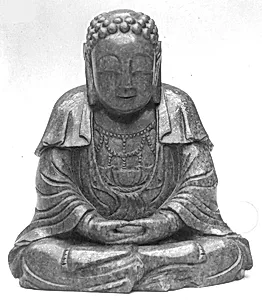
Figure of Buddha
Unknown Artist
18th century
Medium
Lapis lazuli
Dimensions
H. 4 3/4 in. (12.1 cm)
Classification
Hardstone
Culture
China
Department
Asian Art
Museum
Metropolitan Museum of Art, New York, NY
Credit
The Theodore M. Davis Collection, Bequest of Theodore M. Davis, 1915
Accession Number
30.95.324
Rights
Public Domain
Tags
Art Historical Context
This exquisite *Figure of Buddha*, carved in the 18th century by an unknown Chinese artist, stands just 4 3/4 inches tall, making it a intimate treasure for personal devotion. Crafted from lapisuli—a rare, deep-blue semiprecious stone prized in Asia for its celestial hue—this hardstone sculpture exemplifies the refined artistry of Qing dynasty China. The choice of lapis lazuli, often imported from afar and associated with purity and the divine, elevates the figure beyond ordinary devotional objects, symbolizing enlightenment and spiritual serenity. The meticulous carving techniques reveal the sculptor's mastery: fine details in the Buddha's serene face, flowing robes, and meditative posture were achieved on such a diminutive scale, demanding exceptional precision and patience. Hardstone carvings like this were labor-intensive luxury items, reserved for the elite or devout patrons. Housed in the Metropolitan Museum of Art's Asian Art Department as part of The Theodore M. Davis Collection (bequeathed in 1915), this piece reflects China's enduring Buddhist tradition, blending indigenous craftsmanship with religious iconography. Visitors are invited to marvel at how such a small object encapsulates centuries of cultural reverence for the Buddha's teachings.