
Figure of Geoffrey Chaucer
c. 1790
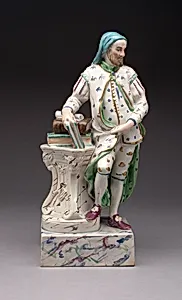
Medium
Lead-glazed earthenware
Dimensions
30.8 × 13.3 × 13.3 cm (12 1/8 × 5 1/4 × 5 1/4 in.)
Classification
earthenware
Department
Applied Arts of Europe
Museum
Art Institute of Chicago
Accession Number
67450
Rights
Public Domain
Art Historical Context
Step into the world of 18th-century English ceramics with this charming *Figure of Geoffrey Chaucer*, around 1790 by the skilled potters of Staffordshire. Standing at just over 12 inches tall, this lead-glazed earthenware sculpture captures the medieval poet—best known for *The Canterbury Tales*— a dignified pose, likely seated or standing with quill in hand, embodying his legacy as the "Father of English Literature." Produced in the heart of England's pottery heartland, such figures were molded from clay, vividly colored by hand, and fired with a shiny lead glaze that brought affordable artistry into middle-class homes. Staffordshire Potteries specialized in these lively, mass-produced figurines during the late 1700s, celebrating historical and literary icons amid a growing fascination with Britain's cultural heritage. This piece reflects the era's blend of industrial innovation and nostalgic revival, making highbrow subjects like Chaucer accessible to everyday admirers. The technique of lead-glazing not only enhanced durability and luster but also allowed for bold polychrome details, turning functional decor into storytelling treasures. Housed in the Art Institute of Chicago's Department of Applied Arts of Europe, this earthenware gem highlights how pottery bridged art and daily life, immortalizing Chaucer's wit and wisdom in a tangible, joyful form. A delightful nod to literary history!
About the Artist
Staffordshire Potteries · 1771–1856
The Staffordshire Potteries, the collective designation for the vibrant ceramic industry centered in the six towns of Burslem, Fenton, Hanley, Longton, Tunstall, and Stoke-upon-Trent in Staffordshire, England, represented the pinnacle of British earthenware production during its flourishing period from 1771 to 1856. This era marked the height of mass-produced pottery, fueled by abundant local reso...