
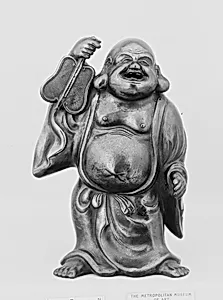
Figure of Hotei
Unknown Artist
18th century
Medium
Clay covered with a thin glaze (Bizen ware, Imbe style)
Dimensions
H. 9 in. (22.9 cm)
Classification
Ceramics
Culture & Period
Japan · Edo period (1615–1868)
Department
Asian Art
Museum
Metropolitan Museum of Art, New York, NY
Credit
Gift of Mr. and Mrs. Samuel Colman, 1893
Accession Number
93.1.78
Rights
Public Domain
Tags
Art Historical Context
Behold the cheerful **Figure of Hotei**, a delightful 18th-century ceramic sculpture from Japan's Edo period (1615–1868). Hotei, one of the beloved Seven Lucky Gods (Shichifukujin), embodies abundance, happiness, and good fortune. Often portrayed as a plump, laughing monk with a sack of treasures and a large belly symbolizing wealth, this figurine captures his jovial spirit, inviting museum visitors to rub his tummy for luck—a tradition still cherished today. Crafted in the renowned Bizen ware tradition from the Imbe style in Okayama Prefecture, the piece is made of durable clay fired at high temperatures, then coated with a thin glaze that enhances its warm, earthy tones. Bizen pottery, prized for its rustic beauty and strength, flourished during the Edo era amid a booming urban culture that celebrated everyday artistry. Standing just 9 inches (22.9 cm) tall, this intimate figure exemplifies the period's masterful ceramic techniques, blending functionality with folk charm. A generous gift to the Metropolitan Museum of Art from Mr. and Mrs. Samuel Colman in 1893, this work highlights Japan's rich ceramic heritage and the enduring appeal of Hotei as a cultural icon of prosperity and joy.