
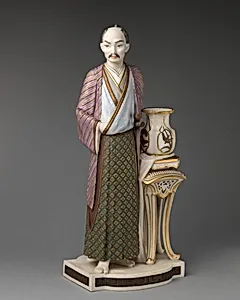
Figure of Japanese man
Medium
Bone china "ivory porcelain" with enamel decoration and gilding
Dimensions
confirmed: 15 11/16 × 7 1/16 × 5 3/4 in., 4.6 lb. (39.8 × 17.9 × 14.6 cm, 2.1 kg)
Classification
Ceramics-Porcelain
Culture
British, Worcester
Department
European Sculpture and Decorative Arts
Museum
Metropolitan Museum of Art, New York, NY
Credit
Gift of Helene Fortunoff and Robert Grossman, 2017
Accession Number
2018.62.100
Rights
Public Domain
Tags
Art Historical Context
This exquisite *Figure of Japanese Man*, crafted in 1879 by the Worcester factory and modeler Hadley, exemplifies the Victorian era's fascination with Japanese aesthetics, known as Japonisme. Produced at the height of Britain's porcelain boom, Worcester was celebrated for its innovative bone china—often called "ivory porcelain for its creamy translucency and durability. Standing nearly 16 inches tall, this sculptural figure captures a dignified Japanese man in traditional attire, blending Eastern motifs with Western technical mastery. The artwork's medium shines through its enamel decoration and lavish gilding, techniques that allowed for vibrant colors and shimmering gold accents on the smooth porcelain surface. Enameling involved firing painted designs at high temperatures to fuse them permanently, while gilding added opulent highlights, making such pieces prized status symbols in 19th-century homes. Housed in the Metropolitan Museum of Art's European Sculpture and Decorative Arts collection, this gift from Helene Fortunoff and Robert Grossman highlights the cultural exchange between Britain and Japan, reflecting how global trade inspired European decorative arts during the Meiji period. A testament to Worcester's artistry, the figure invites visitors to ponder the era's cross-continental creativity, where a simple porcelain sculpture bridged worlds.
About the Artist
Worcester factory|James Hadley · 1751–2008
The Worcester porcelain factory, established in 1751 in Worcester, England, by physician Dr. John Wall and apothecary William Davis along with 14 partners, marked the birth of one of Britain's most enduring ceramic enterprises. Investing £4,500 at Warmstry House on the River Severn, the founders drew on contacts with the Bristol porcelain manufactory to develop a novel soft-paste porcelain using s...