
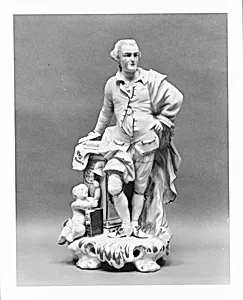
Figure of John Wilkes
ca. 1775
Medium
Porcelain
Dimensions
H. 12 3/4 in. (32.4 cm)
Classification
Figure
Culture
British
Department
The American Wing
Museum
Metropolitan Museum of Art, New York, NY
Credit
Fletcher Fund, 1944
Accession Number
44.89.2
Rights
Public Domain
Tags
Art Historical Context
This charming porcelain figure of John Wilkes, produced by the renowned Chelsea Factory around 1775, the height of 18th-century British ceramic artistry. Standing at 12 3/4 inches tall, it belongs to the soft-paste porcelain tradition pioneered by Chelsea, England's pioneering porcelain manufactory (1743–1770, with later phases). These delicate, translucent wares were hand-molded and vibrantly enameled, often capturing contemporary figures in Rococo style—elegant, playful forms with intricate details in gilding and overglaze colors that brought whimsy to tabletops and mantelpieces. John Wilkes, the radical politician and journalist immortalized here, was a fiery advocate for liberty and press freedom during a turbulent era. By 1775, amid growing tensions with the American colonies, Wilkes symbolized resistance to royal authority; his scandals and imprisonments made him a folk hero. Depicted amid motifs of men and Cupid (per curatorial tags), this figure likely playfully casts him as a mischievous amorist of freedom, blending satire with admiration—a nod to the era's political porcelain, where celebrities and agitators became collectible icons. Housed in The Metropolitan Museum of Art's American Wing (thanks to the 1944 Fletcher Fund), this British cultural treasure highlights transatlantic ties: Wilkes championed American rights, making his image resonate across the Atlantic. A testament to porcelain's role in disseminating ideas, it invites us to ponder how everyday objects fueled revolutionary fervor.
About the Artist
Chelsea Factory · 1742–1784
**Chelsea Porcelain Factory (c. 1743–1784)** was one of the pioneering porcelain manufactories in England, producing some of the most refined and ambitious soft-paste porcelain of the eighteenth century. Established in Chelsea, London, around 1743–1745 by Charles Gouyn and the Huguenot silversmith Nicholas Sprimont, the factory quickly became known for its technical innovation and artistic sophist...