
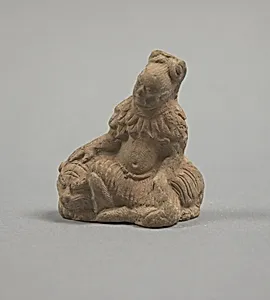
Figure of Luohan and Tiger
Unknown Artist
Medium
Unglazed pottery
Dimensions
H. 2 3/8 in. (6 cm); W. 2 in. (5.1 cm)
Classification
Sculpture
Culture & Period
China · Song dynasty (?) (960–1279)
Department
Asian Art
Museum
Metropolitan Museum of Art, New York, NY
Credit
Rogers Fund, 1930
Accession Number
30.76.81
Rights
Public Domain
Tags
Art Historical Context
This diminutive unglazed pottery sculpture, titled *Figure of Luohan and Tiger captures a serene Buddhist monk—known as a luohan, or arhat—accompanied by a tiger, likely symbolizing the taming of wild forces or spiritual protection. Crafted in China during the Song dynasty960–1279), a golden age of artistic refinement, it stands just 2⅜ inches tall, suggesting it was a personal devotional object or part of a larger ensemble for private worship. Song-era ceramics are renowned for their technical mastery, but this unglazed earthenware exemplifies a more rustic, tactile style, possibly from folk workshops. The raw, unadorned surface highlights the sculptor's focus on form and expression, with the luohan's contemplative pose and the tiger's alert companionship evoking Chan (Zen) Buddhism's emphasis on enlightenment amid the natural world. Such figures reflect the dynasty's vibrant fusion of spirituality and everyday artistry. Acquired through the Rogers Fund in 1930 and now in the Metropolitan Museum of Art's Asian Art collection, this rare piece invites us to ponder the intimate role of Buddhism in Song daily life, where even tiny sculptures carried profound cultural weight.