
Figure of the Finding of Moses
ca. 1859–64
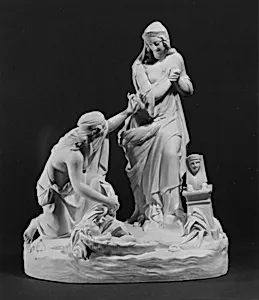
Medium
Porcelain
Dimensions
Approx. 20 x 16 x 11 in. (50.8 x 40.6 x 27.9 cm)
Classification
Figure
Culture
British
Department
The American Wing
Museum
Metropolitan Museum of Art, New York, NY
Credit
Purchase, The Edgar J. Kaufmann Foundation Gift, 1968
Accession Number
68.97.7
Rights
Public Domain
Tags
Art Historical Context
This porcelain sculpture by British artist William Beattie captures the biblical moment from the Book of Exodus when Pharaoh’s daughter discovers the infant Moses in the bulrushes along the Nile. Created around 1859–64, the work brings together multiple figures—including men and women—in a compact yet expressive composition measuring roughly 20 inches high. The medium of porcelain allowed for fine detailing and a luminous surface that highlights the tenderness of the scene. In the mid-nineteenth century, such narrative porcelain figures were popular in British homes, blending religious storytelling with the refined taste of the Victorian era. Beattie’s piece reflects the period’s fascination with moral and biblical subjects, rendered through the delicate modeling possible in porcelain. Its presence in the Metropolitan Museum’s American Wing underscores the strong influence of British decorative arts on American collectors during the nineteenth century. Acquired in 1968 through the generosity of the Edgar J. Kaufmann Foundation, the sculpture offers visitors a glimpse into both the technical artistry of British porcelain and the enduring appeal of the Finding of Moses as a symbol of divine protection and compassion.