
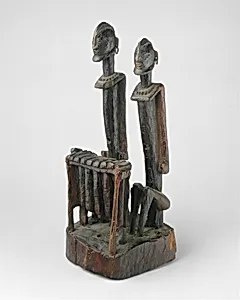
Figure: Pair of Balafon Players
18th–early 19th century
Medium
Wood, metal
Dimensions
H. 15 7/16 x W. 5 3/4 x D. 6 1/2 in. (39.3 x 14.6 x 16.5 cm)
Classification
Wood-Sculpture
Culture
Dogon
Department
Arts of Africa, Oceania, and the Americas
Museum
Metropolitan Museum of Art, New York, NY
Credit
The Michael C. Rockefeller Memorial Collection, Bequest of Nelson A. Rockefeller, 1979
Accession Number
1979.206.131
Rights
Public Domain
Tags
Art Historical Context
This exquisite wooden sculpture, titled *Figure: Pair of Balon Players*, was crafted by a Dogon artist from Mali during the 18th early 19th century Standing just over 15 inches tall the work depicts two stylized human figures poised with balafons—traditional West African xylophone-like instruments made of wood and gourds. Carved from wood with metal accents, it exemplifies the Dogon mastery of abstract figuration, where elongated forms and geometric proportions convey spiritual vitality rather than realistic anatomy. In Dogon culture, such paired figures often symbolized harmony, community rituals, or ancestral presences, with music playing a central role in ceremonies honoring fertility, harvests, and the cosmos. The balafon's inclusion highlights its sacred status, used to invoke spirits and maintain social bonds. The sculpture's patina, likely from ritual oils and handling, speaks to its original use in altars or shrines. Housed in The Metropolitan Museum of Art's Michael C. Rockefeller Memorial Collection, this piece offers a window into pre-colonial African artistry, blending technical precision—evident in the interlocking figures and incised details—with profound cultural symbolism. A testament to the Dogon's enduring legacy in sculpture.