
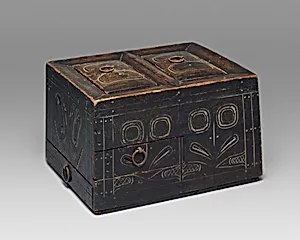
Utility Box
Unknown Artist
1825–30
Medium
Wood, metal
Dimensions
H. 6 1/2 x W. 10 1/2 in. (16.5 x 26.7 cm)
Classification
Wood-Sculpture
Culture
Supiak
Department
Arts of Africa, Oceania, and the Americas
Museum
Metropolitan Museum of Art, New York, NY
Credit
Ralph T. Coe Collection, Gift of Ralph T. Coe Foundation for the Arts, 2011
Accession Number
2011.154.164a–g
Rights
Public Domain
Tags
Art Historical Context
This exquisite Utility Box, crafted by an unknown Supiak artist around 1825–30, hails from the rich traditions of the indigenous peoples of Alaska, now housed in the Metropolitan Museum of Art Department of Arts of Africa,, and the Americas. a compact 6½ x 10½ inches, it exemplifies everyday ingenuity transformed into enduring art. The Supiak, part of the broader Yup'ik cultural sphere, were skilled makers of practical containers that served vital roles in daily life and community rituals, storing food, tools, or ceremonial items in the harsh Arctic environment. Fashioned from wood with metal accents—likely incorporating traded materials post-European contact—the box showcases sophisticated woodworking techniques. Artisans kerfed (notched) the wood to bend it into shape without breaking, securing seams with pegs or early metal fasteners, a method that highlights both functionality and sculptural precision. Classified as a wood sculpture, it bridges utility and aesthetics, its modest form inviting contemplation of the maker's mastery. As part of the Ralph T. Coe Collection, this piece underscores the cultural significance of Supiak craftsmanship, preserving a snapshot of early 19th-century indigenous innovation amid colonial influences. Visitors are drawn to its tactile humility, a reminder that beauty often resides in the objects of survival.