
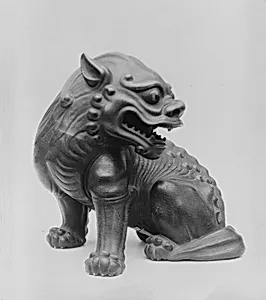
Figure (Shishi)
Unknown Artist
1800
Medium
Stoneware covered with thin glaze (Bizen ware)
Dimensions
H. 8 1/2 in. (21.6 cm); W. 10 1/8 in. (25.7 cm)
Classification
Ceramics
Culture & Period
Japan · Edo period (1615–1868)
Department
Asian Art
Museum
Metropolitan Museum of Art, New York, NY
Credit
Gift of Mrs. V. Everit Macy, 1923
Accession Number
23.225.47
Rights
Public Domain
Tags
Art Historical Context
This charming stoneware figure, known as a *shishi* (guardian lion), hails from Japan's Edo period (16151868), crafted around 1800 in the Bizen ware tradition. just 8½ inches tall and 10⅛ inches wide, it exemplifies the rustic beauty of Bizen pottery from Okayama Prefecture. Made from dense, iron-rich clay and fired at high temperatures in wood-burning kilns, the piece features a thin, natural glaze formed by ash deposits during firing. This technique yields subtle earthy tones—ochres, grays, and subtle flashes of color—without artificial decoration, highlighting Bizen's emphasis on the clay's inherent qualities and the unpredictable magic of the kiln. In Japanese culture, *shishi* figures served as protective talismans, warding off evil spirits and symbolizing strength and good fortune. Often placed at temple entrances or home gateways in pairs (one with an open mouth to exhale evil, the other closed to retain good), this lively depiction captures the lion's fierce yet playful demeanor with dynamic carving and textured fur. As an anonymous artisan's work, it reflects the Edo era's flourishing folk art, where everyday ceramics blended utility and spirituality. Now at the Metropolitan Museum of Art (gift of Mrs. V. Everit Macy, 1923), this *shishi* invites us to appreciate Japan's timeless ceramic heritage—raw, resilient, and full of character.