
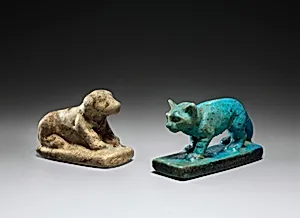
Figurine of a Dog
Unknown Artist
ca. 1961–1917 B.C.
Medium
Faience
Dimensions
L. 5.3 cm (2 1/16 in.); W. 2.3 cm (7/8 in.); H. 3.6 cm (1 7/16 in.)
Classification
Dog
Period
Middle Kingdom
Department
Egyptian Art
Museum
Metropolitan Museum of Art, New York, NY
Credit
Rogers Fund and Edward S. Harkness Gift, 1924
Accession Number
24.1.51
Rights
Public Domain
Tags
Art Historical Context
Nestled in the Egyptian Art galleries of the Metropolitan Museum of, this delightful *Figurine of a Dog captures the charm of ancient companionship from Egypt's Middle Kingdom, around 1961–1917 B.C., during Dynasty 12. Standing just 3.6 cm tall, this petite sculpture—measuring 5.3 cm long and 2.3 cm wide—likely served as an amulet,ive offering, or cherished decorative item. Crafted by an unknown artist, it reflects the period's refined artistry, when Egypt enjoyed stability and a renewed focus on everyday life alongside the divine. Made of faience, a signature Egyptian material, the figurine consists of finely ground quartz paste shaped into form and coated with a vibrant turquoise glaze fired at low temperatures. This technique, perfected over millennia, produced luminous, jewel-like objects symbolizing eternity and the Nile's life-giving waters. Faience's durability and vivid color made it ideal for small-scale works like this, accessible to both elite and common folk. Dogs held special significance in ancient Egypt as loyal hunters, guardians, and pets, often appearing in tombs to ensure protection in the afterlife. Acquired through the Rogers Fund and Edward S. Harkness Gift in 1924, this figurine invites us to imagine a world where such a faithful friend brought joy across millennia.