
Finger ring
Unknown Artist
ca. 3rd century BCE–3rd century CE
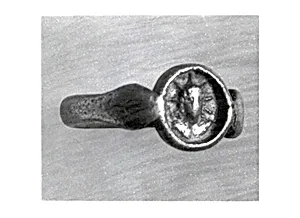
Medium
Silver
Dimensions
1.06 x 0.94 in. (2.69 x 2.39 cm)
Classification
Metalwork-Ornaments
Culture & Period
Parthian · Parthian
Department
Ancient Near Eastern Art
Museum
Metropolitan Museum of Art, New York, NY
Credit
Bequest of W. Gedney Beatty, 1941
Accession Number
41.160.296
Rights
Public Domain
Art Historical Context
This delicate silver finger ring, crafted by an unknown Parthian artisan around the 3rd century BCE to 3rd century CE, offers a glimpse into the opulent world of the Parthian Empire—an ancient powerhouse that stretched from modern-day Iran to Mesopotamia, bridging Hellenistic influences and Persian traditions. Measuring just over an inch in diameter, its petite size belies its cultural weight as personal adornment, likely worn by elites to signify status or ward off evil. Parthian jewelry like this exemplifies the era's masterful metalworking, where silver was prized for its luster and malleability, often hammered, incised, or chased to create intricate motifs reflecting nomadic and imperial motifs. The ring's survival speaks to the Parthians' enduring legacy as skilled horsemen and traders along the Silk Road, rivaling Rome in splendor and sophistication. Such ornaments were not mere decoration but symbols of identity in a multicultural realm blending Greek, Iranian, and Central Asian elements. Today, this treasure from the Metropolitan Museum of Art's Ancient Near Eastern collection—bequeathed by W. Gedney Beatty in 1941—invites us to ponder the hands that once slipped it on, connecting us to lives lived millennia ago.