
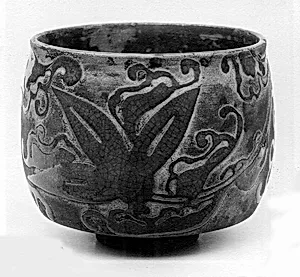
Fire bowl
ca. 1830
Medium
Clay, unglazed, with decorations in dark blue enamel (Awata ware)
Dimensions
H. 3 1/2 in. (8.9 cm); Diam. 4 in. (10.2 cm)
Classification
Ceramics
Culture & Period
Japan · Edo period (1615–1868)
Department
Asian Art
Museum
Metropolitan Museum of Art, New York, NY
Credit
The Howard Mansfield Collection, Gift of Howard Mansfield, 1936
Accession Number
36.120.528
Rights
Public Domain
Art Historical Context
This elegant fire bowl, crafted around 1830 by the Japanese artist Kinkozan, exemplifies the refined ceramic traditions of the Edo period. Measuring just over three and a half inches high, the small vessel was formed from unglazed clay and adorned with delicate decorations in dark blue enamel. As an example of Awata ware from the Kyoto region, it reflects the period’s emphasis on subtle beauty and everyday functionality in household objects. During the Edo era (1615–1868), Japanese potters like Kinkozan elevated utilitarian items into works of art, blending simplicity with refined surface details. The use of dark blue enamel on an unglazed surface highlights a distinctive technique that allowed the natural clay texture to remain visible while adding vibrant contrast. Such pieces were often used for incense or warming, embodying the era’s appreciation for quiet moments of ritual and contemplation. Today, this fire bowl resides in the Metropolitan Museum of Art’s Asian Art collection as part of the Howard Mansfield gift. Its modest scale and thoughtful decoration invite viewers to appreciate the skill and cultural values embedded in Japanese ceramics of the time.
About the Artist
Kinkozan
**Kinkozan** refers to the renowned Kinkōzan family workshop of Kyoto potters, active from 1645 until its closure around 1927. Originally known under the Kobayashi family name, the workshop received the Kinkozan designation in the 18th century from the Tokugawa shogunate. It specialized in Satsuma ware, particularly the elaborately decorated Kyoto (Kyō-Satsuma) style featuring ivory-bodied earthen...