
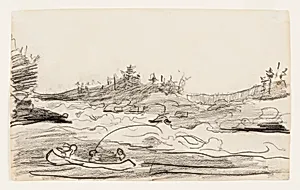
Fishermen in the Rapids
Medium
landscapes
Classification
landscapes
Department
Smithsonian Collection
Museum
Smithsonian American Art Museum
Credit
Gift of Charles Savage Homer, Jr.
Accession Number
1912-12-236
Rights
Public Domain
About this artwork
Research in Progress
Art Historical Context
Winslow Homer, one of America’s most celebrated 19th-century artists, created “Fishermen in the Rapids” in 1897 during a mature phase of his career. Known for his realistic style and deep engagement with the natural world, often portrayed the quiet drama of outdoor life, moving beyond his early work as a Civil War illustrator and magazine artist to focus on powerful landscapes that reveal humanity’s relationship with untamed environments. Classified as a landscape, this work highlights the American tradition of depicting nature not merely as scenery but as a vital, sometimes challenging force. The scene of fishermen navigating rushing waters reflects Homer’s interest in movement, light, and the elemental energy of rivers and seas. Its presence in the Smithsonian American Art Museum, gifted by the artist’s brother Charles Savage Homer, Jr., underscores its enduring place in the nation’s cultural heritage and invites viewers to appreciate the timeless tension between people and the wilderness.