
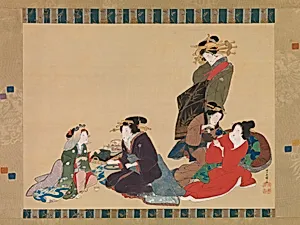
蹄斎北馬筆 五美人図|Five Beauties
1840
Medium
Hanging scroll; ink and color on silk
Dimensions
Image: 15 3/8 × 20 3/4 in. (39.1 × 52.7 cm) Overall with mounting: 47 3/4 × 25 3/4 in. (121.3 × 65.4 cm) Overall with knobs: 47 3/4 × 28 in. (121.3 × 71.1 cm)
Classification
Paintings
Culture & Period
Japan · Edo period (1615–1868)
Department
Asian Art
Museum
Metropolitan Museum of Art, New York, NY
Credit
Gift of Florence and Herbert Irving, 2015
Accession Number
2015.500.9.12
Rights
Public Domain
Tags
Art Historical Context
Teisai Hokuba's *Five Beauties* (1840) is a captivating hanging scroll painted in ink and color on silk measuring about 15⅜ × 20¾ inches. This Edo-period (1615–1868) work exemplifies traditional Japanese scroll painting, a format prized for its portability and ceremonial display—unrolled in intimate settings like tea rooms or private chambers to reveal delicate scenes. The silk medium allows vibrant colors to shimmer, capturing subtle textures of fabric and skin with refined brushwork. Depicting five elegant women engaged in leisurely pursuits like tea and games, the painting reflects the "floating world" (ukiyo) culture of urban Edo (modern Tokyo), where bijin-ga—images of beautiful women—celebrated feminine grace and everyday joys. Hokuba, active in this vibrant era, draws from ukiyo-e traditions, blending precise lines with soft color washes to evoke harmony and refinement. Such artworks offered glimpses into refined domestic life, cherished by collectors for their poetic charm. Now at the Metropolitan Museum of Art through a generous gift, *Five Beauties* invites us to savor the artistry of 19th-century Japan, where silk scrolls preserved fleeting moments of beauty amid a changing world.
About the Artist
Teisai Hokuba · 1771–1844
Teisai Hokuba (1771–1844) was a Japanese artist of the Edo period who worked in the tradition of ukiyo-e, the celebrated school of woodblock prints and paintings that depicted the floating world of urban pleasure, theater, landscape, and daily life. A devoted pupil of Katsushika Hokusai — one of the towering figures in the history of Japanese art — Hokuba adopted the prefix of his master's name as...