
Flageolet
1844–50
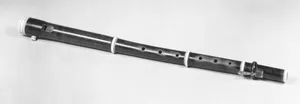
Medium
Boxwood, ivory, brass
Dimensions
L. 49.7 cm Speaking L. 44.4 cm
Classification
Aerophone-Whistle Flute-flageolet
Culture
American
Department
Musical Instruments
Museum
Metropolitan Museum of Art, New York, NY
Credit
Rogers Fund, 1987
Accession Number
1987.97.1
Rights
Public Domain
Art Historical Context
This elegant flageolet, crafted by American maker Frederick Riley 1844 and 1850, represents a refined example of mid-nineteenth-century instrument design. Measuring nearly 50 centimeters in length, the instrument belongs to the whistle-flute family of aerophones and was intended for both amateur and professional musicians seeking a bright, clear tone. Its construction from boxwood, accented with ivory and brass, reflects the period’s preference for materials that offered durability, visual appeal, and acoustic resonance. The use of boxwood provided a warm, responsive body, while ivory mouthpieces and brass fittings added both elegance and functional precision. Such details were typical of American workshops striving to match European standards of craftsmanship during an era when domestic music-making flourished in parlors and concert halls alike. Acquired by the Metropolitan Museum through the Rogers Fund in 1987, this flageolet offers visitors a tangible connection to the musical life of early Victorian America.