
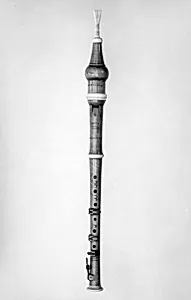
Flageolet
ca. 1835
Medium
Boxwood, ivory
Dimensions
L. 53.2 cm (20-5/16 in.)
Classification
Aerophone-Whistle Flute-flageolet
Culture
British
Department
Musical Instruments
Museum
Metropolitan Museum of Art, New York, NY
Credit
Gift of Mrs. Saul S. Weinberg, 1969
Accession Number
69.43.2
Rights
Public Domain
Art Historical Context
This elegant flageolet, crafted around 1835 by the maker John Simpson, is a fine example of 19th-century woodwind craftsmanship. Measuring just over 20 inches in length, the instrument is fashioned from boxwood with ivory fittings, materials chosen for their durability and pleasing tonal qualities. As an aerophone classified as a whistle flute, it produces a clear, flute-like sound through a simple fipple mouthpiece, reflecting the practical yet refined design favored by amateur and professional musicians alike during the Georgian and early Victorian eras. Flageolets enjoyed widespread popularity in Britain as portable, accessible instruments for domestic music-making and theatrical settings. Simpson’s work embodies the period’s blend of functionality and subtle ornamentation, with the ivory accents adding both visual appeal and structural reinforcement at key joints. Housed in the Metropolitan Museum of Art’s musical instruments collection, this piece—generously gifted by Mrs. Saul S. Weinberg in 1969—offers visitors a tangible connection to the rich tradition of British instrument making and the intimate soundscapes of the early 19th century.