
Flageolet
ca. 1835
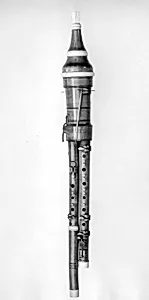
Medium
Boxwood, ivory, silver
Dimensions
L.: 54.1 cm (21-5/16 in.)
Classification
Aerophone-Whistle Flute-flageolet
Culture
British
Department
Musical Instruments
Museum
Metropolitan Museum of Art, New York, NY
Credit
Gift of Mrs. Saul S. Weinberg, 1969
Accession Number
69.43.1
Rights
Public Domain
Art Historical Context
This elegant flageolet, crafted around 1835 by British maker John Simpson, represents a refined example of early nineteenth-century wind instruments. Measuring just over 21 inches in length, the instrument belongs to the aerophone family as a whistle flute, designed for gentle, melodic tones suited to both amateur and domestic music-making. Its presence in the Metropolitan Museum’s collection, acquired through the generous gift of Mrs. Saul S. Weinberg in 1969, highlights the enduring appeal of such finely made objects. The combination of materials—warm boxwood for the body, smooth ivory accents, and gleaming silver fittings—reflects the period’s taste for instruments that balanced musical function with visual elegance. Simpson’s careful workmanship would have ensured precise intonation and comfortable playability, qualities that made flageolets popular among British musicians and enthusiasts of the era. Today, this piece offers visitors a tangible connection to the intimate sound worlds of the 1830s, where music was often enjoyed in parlors and drawing rooms rather than grand concert halls.