
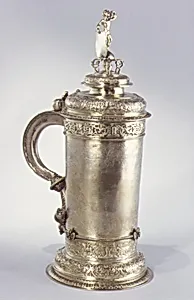
Flagon
Unknown Artist
late 16th century
Medium
Silver gilt
Dimensions
12 1/4 × 5 1/8 in. (31.1 × 13 cm)
Classification
Metalwork-Silver
Culture
probably German
Department
European Sculpture and Decorative Arts
Museum
Metropolitan Museum of Art, New York, NY
Credit
Gift of J. Pierpont Morgan, 1917
Accession Number
17.190.612
Rights
Public Domain
Tags
Art Historical Context
This elegant silver gilt flagon, crafted in the late 16th century and likely of German origin, exemplifies the opulent metalwork of the Northern Renaissance. Standing at 12¼ × 5⅛ inches, it served as a ceremonial vessel for wine or ale, its gleaming surface gilded with a thin layer of gold over silver to evoke luxury and prestige. Such flagons were prized possessions in wealthy households, banqueting halls, or ecclesiastical settings, showcasing the virtuoso skills of silversmiths who combined chasing, engraving, and gilding techniques for both functionality and display. The artwork's decoration, featuring male nudes, draws on classical antiquity—a hallmark of Renaissance revival—symbolizing heroic ideals, strength, and the human form's beauty. In Protestant-influenced Germany, these motifs blended secular grandeur with subtle nods to Greco-Roman heritage, reflecting a cultural shift toward humanism amid religious upheavals. Its intricate craftsmanship highlights the era's technical prowess in silverwork, a medium that balanced durability with dazzling reflectivity. Generously gifted to The Metropolitan Museum of Art in 1917 by J. Pierpont Morgan, this flagon offers a window into elite European material culture, inviting visitors to appreciate the artistry hidden in everyday luxury.